
In nightlife, packed rooms can hide weak brands because attention looks impressive. Gravity behaves differently.
Some nightlife venues are constantly busy: the calendar is full, the room is loud, the social posts look strong, and the guest list is growing. There’s always another event, another activation, another reason to come back this weekend.
From the outside, that momentum looks like success. Operators see packed rooms, strong bar sales, high engagement, and visible demand.
But in nightlife, activity and importance aren’t the same thing. Confusing the two is one of the most dangerous mistakes operators make.
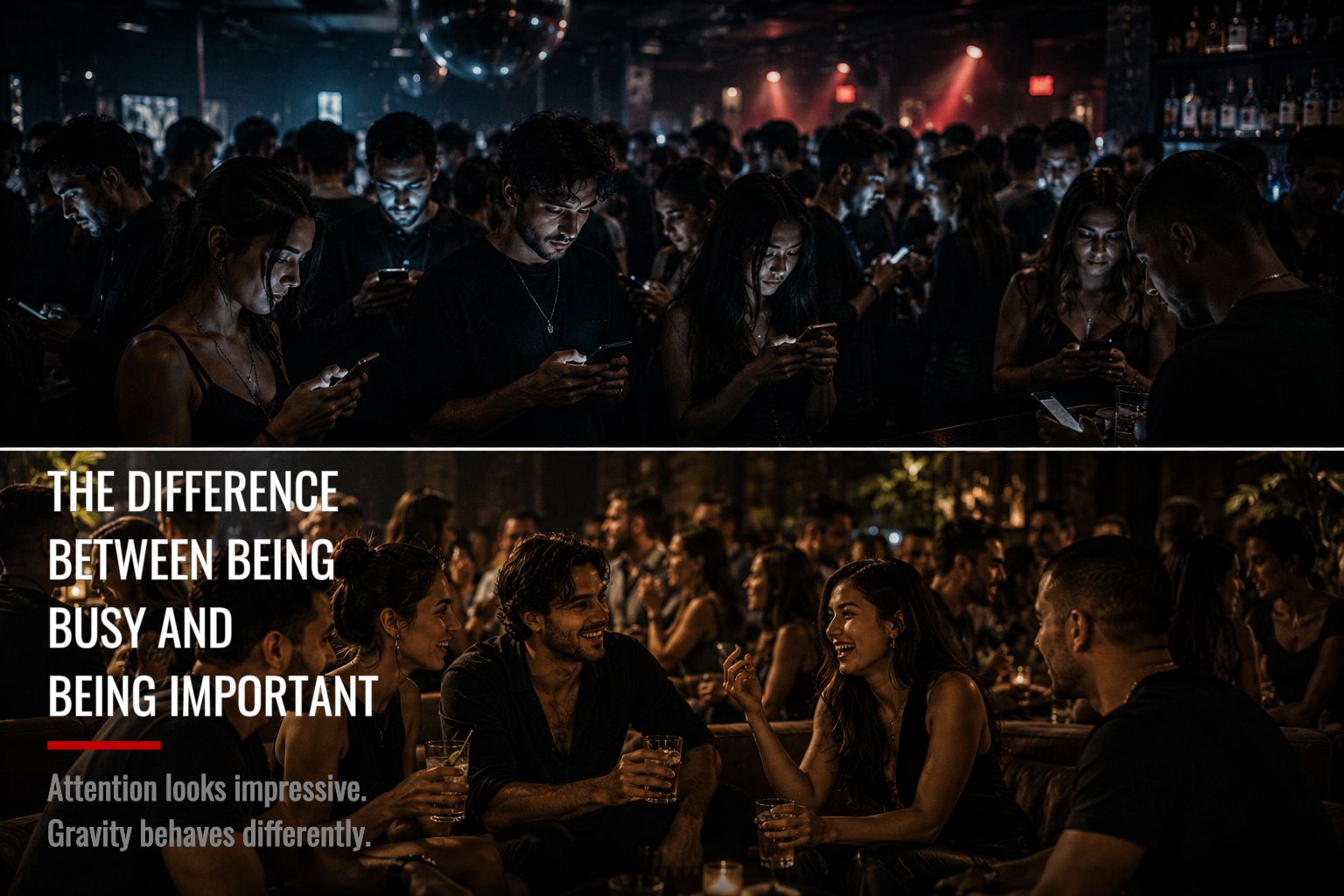
AI-generated image
Nightlife operators often confuse visibility with cultural importance. But packed rooms, viral moments, and constant activity don’t automatically create loyalty, retention, or long-term relevance. In many cases, the venues generating the most attention are also the most vulnerable to drift, inconsistency, and eventual replacement.
Busy is visibility. Important is preference.
A venue can generate traffic without generating attachment. That distinction matters more now than ever.
Busy venues often rely on:
- novelty
- stimulation
- constant promotion
- event dependency
- influencer circulation
- social spikes
- aggressive marketing pressure
Important venues behave differently. Guests choose them habitually, intentionally, and repeatedly. People recommend them without being asked. These venues become part of routines, identities, rituals, and social patterns. Guests feel their absence when they stop going.
That’s not attention, that’s gravity. And gravity compounds differently than attention does.
Attention creates motion. Gravity creates return behavior.
Nightlife operators often mistake movement for momentum. A packed Friday can create the illusion of strength while hiding operational fragility underneath: inconsistent guest experience, weak retention, low emotional attachment, unstable identity, shallow loyalty, and dependence on constant stimulation.
This is why some venues stay busy for years without ever becoming important culturally. They generate transactions; they never generate attachment. The room fills, the memory fades, the cycle repeats. Eventually, the operator must work harder and harder just to maintain the same level of energy the venue once generated naturally.
That’s not sustainable momentum. It’s escalation pressure.
The market has become faster, louder, and more disposable.
The modern nightlife environment rewards visibility aggressively. Algorithms reward novelty, and social media rewards spectacle.
Guests have more options than ever. In fact, switching costs are almost nonexistent. Eliminating a venue from their routine doesn’t impact a guest significantly.
A venue no longer competes only against nearby operators. It competes against:
- every event in the city
- every trending venue online
- every influencer recommendation
- every temporary social spike
- every experience optimized for immediate attention
That environment creates a dangerous temptation: operators begin optimizing for reaction instead of retention. Unfortunately, reaction is addictive. A packed room produces emotional validation. High engagement creates perceived relevance. Viral moments create the illusion of cultural significance.
However, visibility isn’t the same thing as importance. A venue can dominate attention while remaining completely replaceable.
Importance is built through behavioral consistency.
The venues that survive long-term usually create something deeper than stimulation. They create familiarity. They build recognition and emotional predictability. Social belonging and identity alignment are designed and implemented with intention. Guests know what the venue feels like before they walk through the door.
That consistency matters because nightlife is emotional infrastructure. People don’t go out solely for entertainment. They go out seeking ritual, identity, connection, status, escape, familiarity, belonging, and reinforcement of self-image.
The strongest nightlife brands understand this intuitively.
They’re not simply producing events, they’re producing behavioral return patterns. That changes how the business operates. Once guests attach themselves emotionally to the venue itself, the operator no longer has to constantly manufacture urgency to survive.
The most dangerous rooms are often the loudest ones.
Some venues become trapped in permanent stimulation cycles: every weekend must feel bigger than the last, every quarter requires a stronger push, every dip in traffic creates panic, every slowdown triggers another promotional escalation.
From the outside, these venues often look successful. Internally, they’re exhausted. Margins tighten, identity weakens, and consistency drifts. Staff burns out. The crowd changes constantly.
Nothing compounds because nothing stabilizes long enough to build cultural weight. The venue stays busy but never becomes important. That distinction eventually becomes expensive.
Important venues create gravity.
The most resilient nightlife venues rarely rely on noise alone. They develop cultural positioning strong enough that people continue choosing them even when something “bigger” is happening elsewhere. That’s an entirely different level of operational strength.
These venues understand that consistency, identity, standards, atmosphere, emotional familiarity, and trust matter. Most importantly, they understand that retention is more valuable than temporary visibility.
Sure, attention spikes create traffic. It’s gravity that creates return behavior. And return behavior is what turns nightlife venues into institutions rather than temporary sensations.
Everything else is noise, and noise is expensive.
Measure what matters.
A full room doesn’t always indicate a healthy business. Sustainable performance comes from understanding why guests return, how operations support the experience, and where long-term value is being created. The Nightlife Operator Intensive™ provides a structured assessment of those factors, helping operators distinguish between temporary momentum and lasting competitive advantage.